

If you prefer buying whole fish for maximum freshness, learning how to clean and fillet it yourself will save you money and give you perfect fillet cuts for cooking. Whether you are dealing with seabream, seabass, baby grouper, or any other round fish, the basic steps are similar.
In this guide, you will learn the correct way to clean fish and extract fillets with minimal waste, along with professional tips for the best results.
What is a Round Fish?
The term Round Fish refers to fish with a cylindrical or oval body, which have an eye on each side of the head. Popular examples include:
- Seabream
- Seabass
- Grouper
- Salmon
- Kingfish
- Emperor (Sheri)
This type is characterized by being easy to fillet compared to some other types when using the appropriate tools.
Tools You Will Need
Before starting, prepare the following tools:
- A sharp, flexible fillet knife.
- A stable cutting board.
- Tweezers to remove pin bones.
- Paper towels to dry the fish.
- A bowl for waste.
The sharper the knife, the easier and more precise the cutting process will be.
Step One: Preparing the Fish
Place the fish on the cutting board so its back is facing up or towards you, depending on your comfort while working.
If it has scales, remove them first using a scaler or the back of a knife. Always make sure to cut the tail and fins, then wash the fish thoroughly to remove any residue.
If it has not been cleaned from the inside, gently open the belly and remove the innards, then rinse the inner cavity with cold water and dry the fish well before starting to cut.
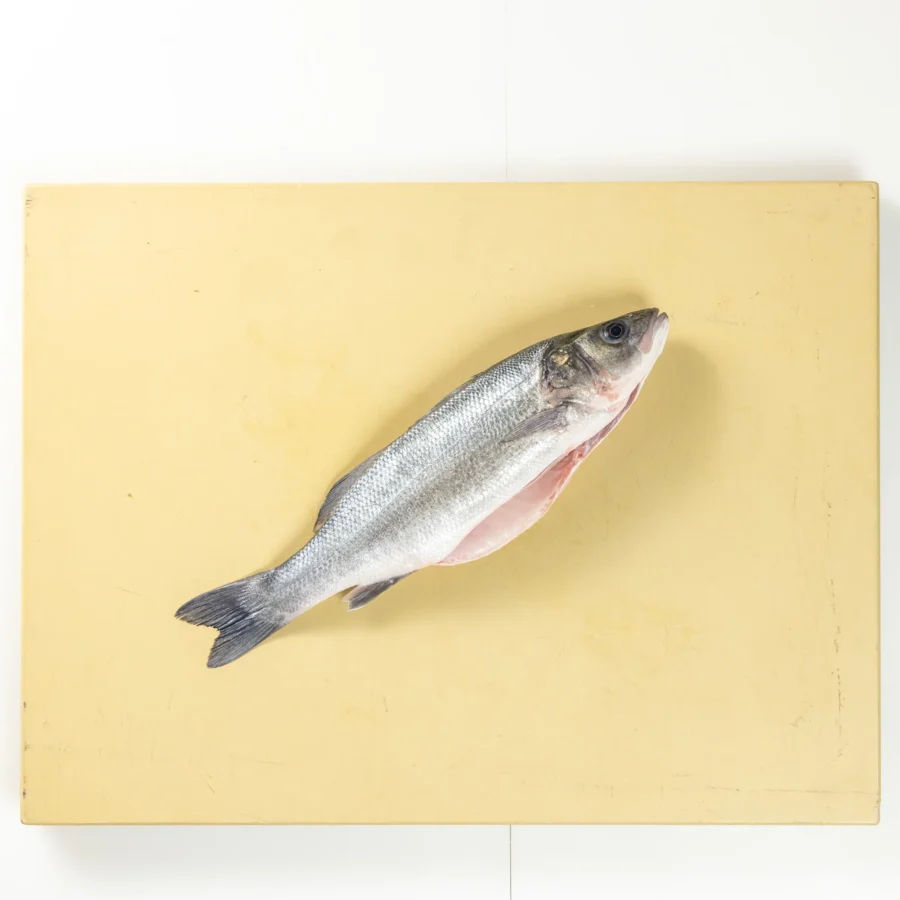
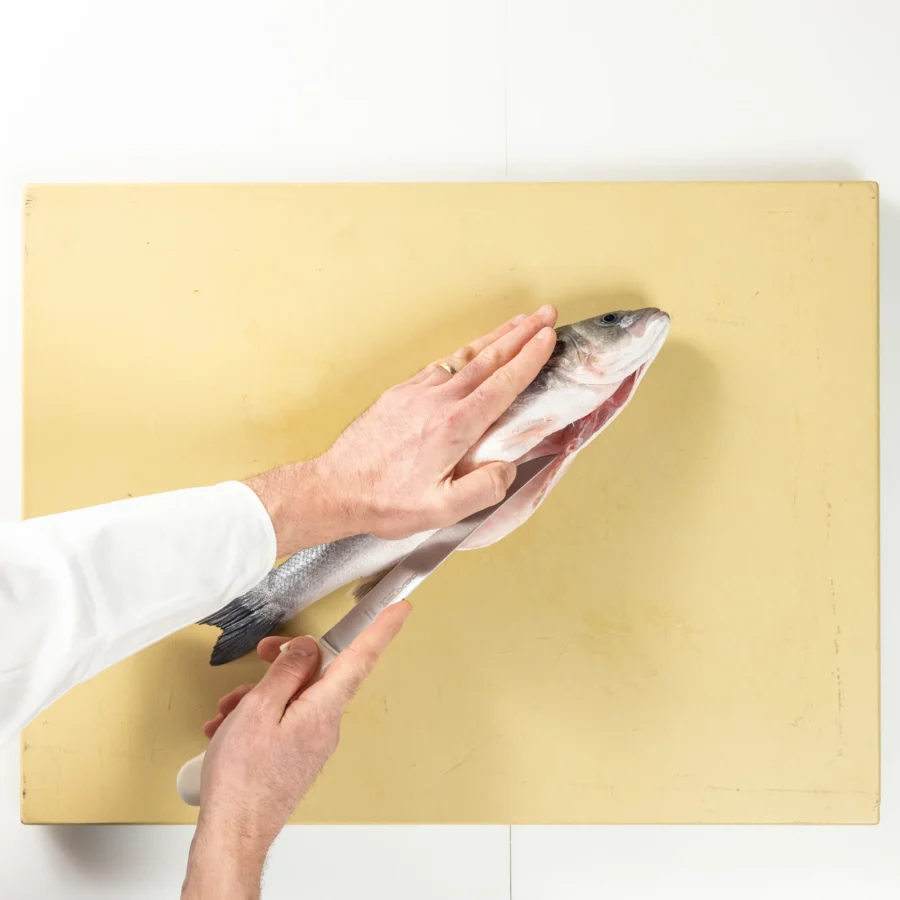
Step Two: First Cut Behind the Gills
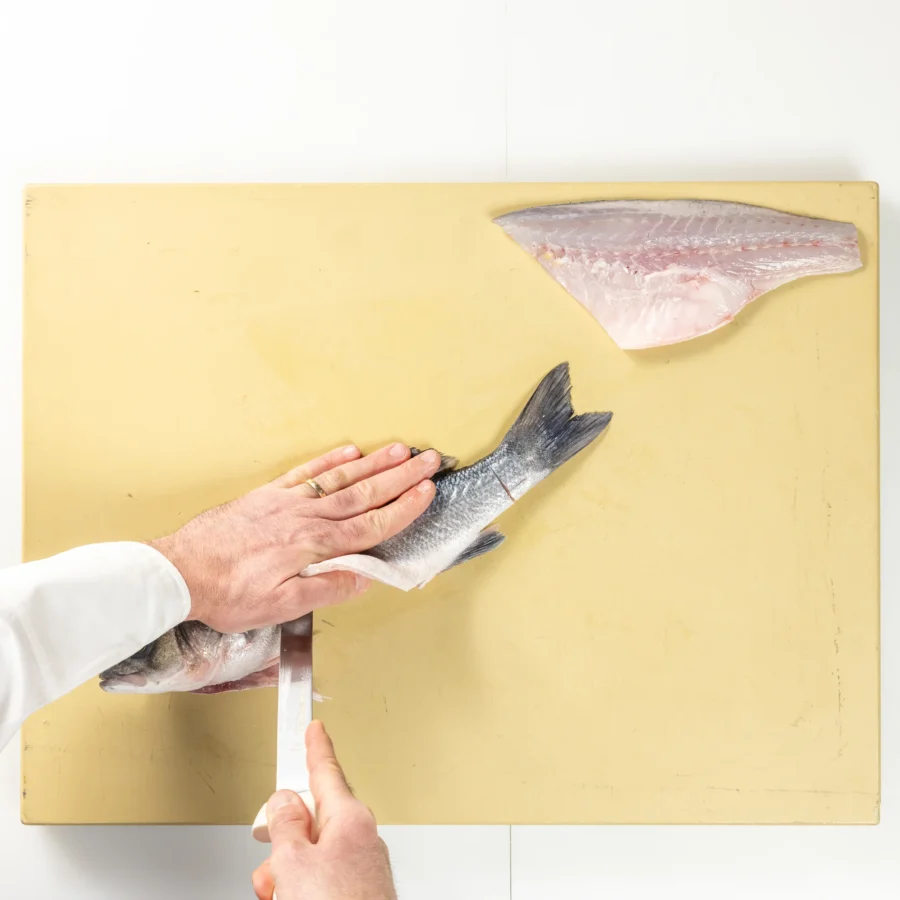
Start by making a diagonal cut directly behind the gill cover until you reach the spine.
Do not cut the head off completely; instead, make this cut the starting point to separate the fillet from the bones.
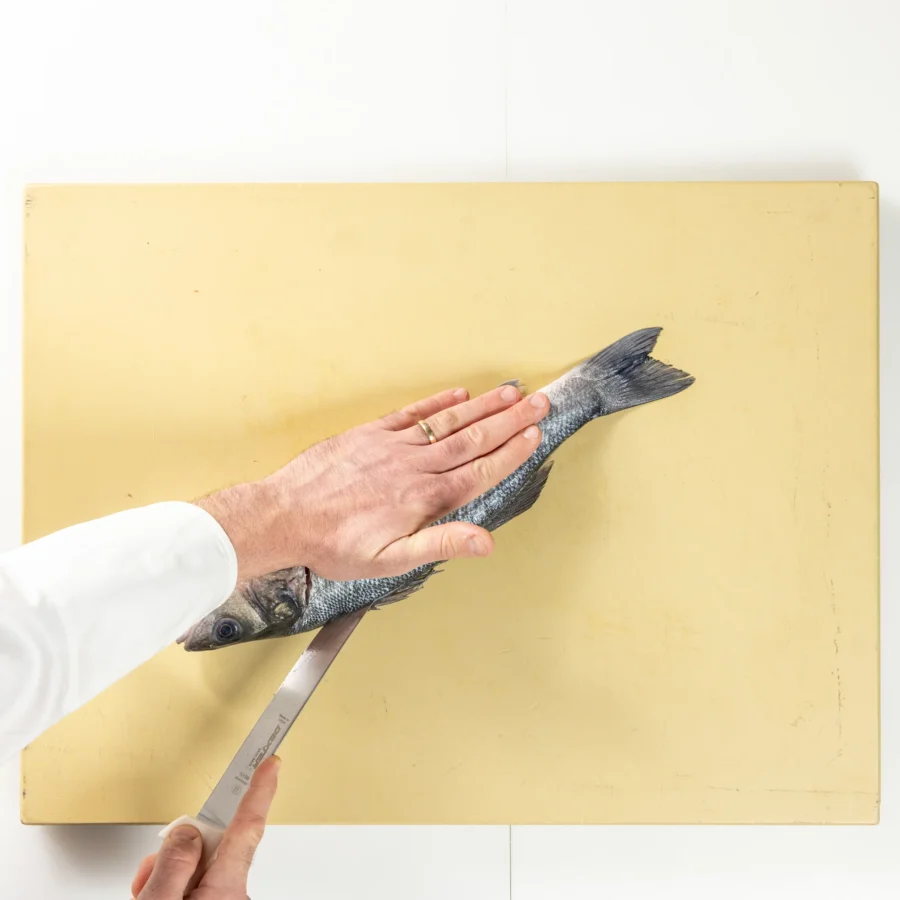
Step Three: Separating the First Fillet
Guide the knife along the spine, keeping it in contact with the bones as much as possible.
Gradually pull the knife from the head to the tail in a long, smooth motion, lifting the fillet slightly as you cut.
This method helps extract the maximum amount of meat possible and reduces waste.
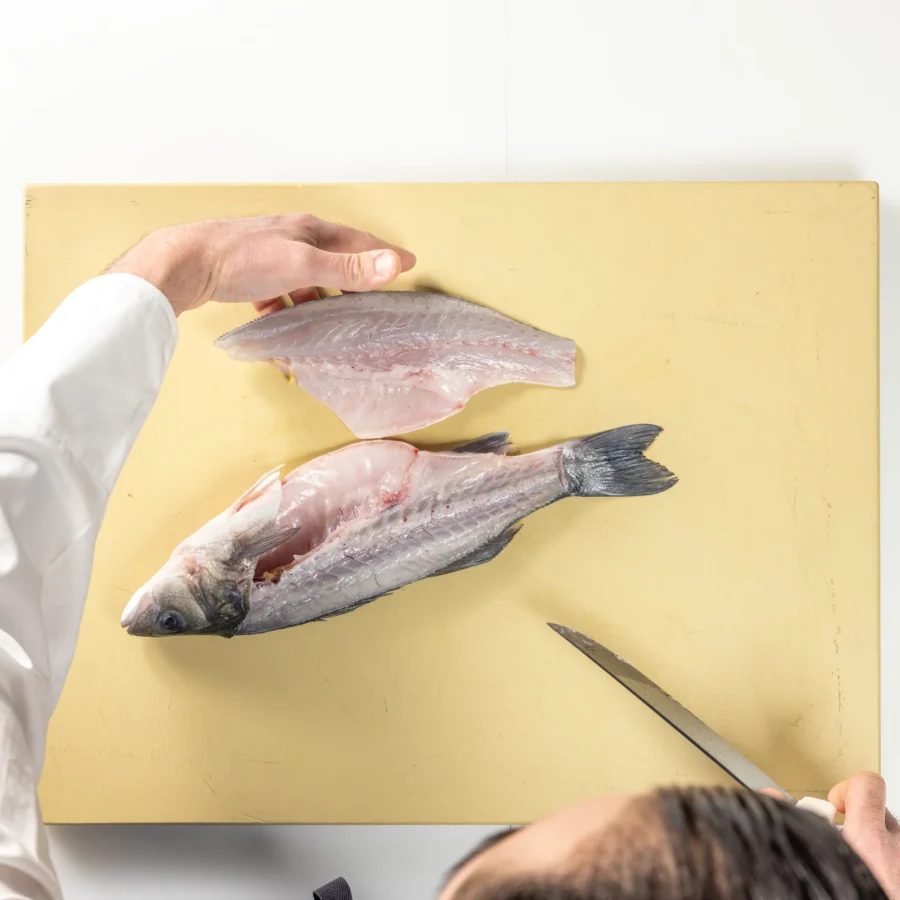
Step Four: Extracting the Whole Fillet
Continue gliding over the rib cage bones until the knife reaches the tail.
Then, cut the final piece to completely free the fillet from the body.
If you notice any remaining meat on the frame, you can gently run the knife back over it to extract it.
Step Five: Repeating the Process on the Other Side
Flip the fish over and repeat the same steps to remove the second fillet.
This side might be slightly more difficult because the fish is now less stable, so work calmly and do not rush.
Step Six: Removing Pin Bones
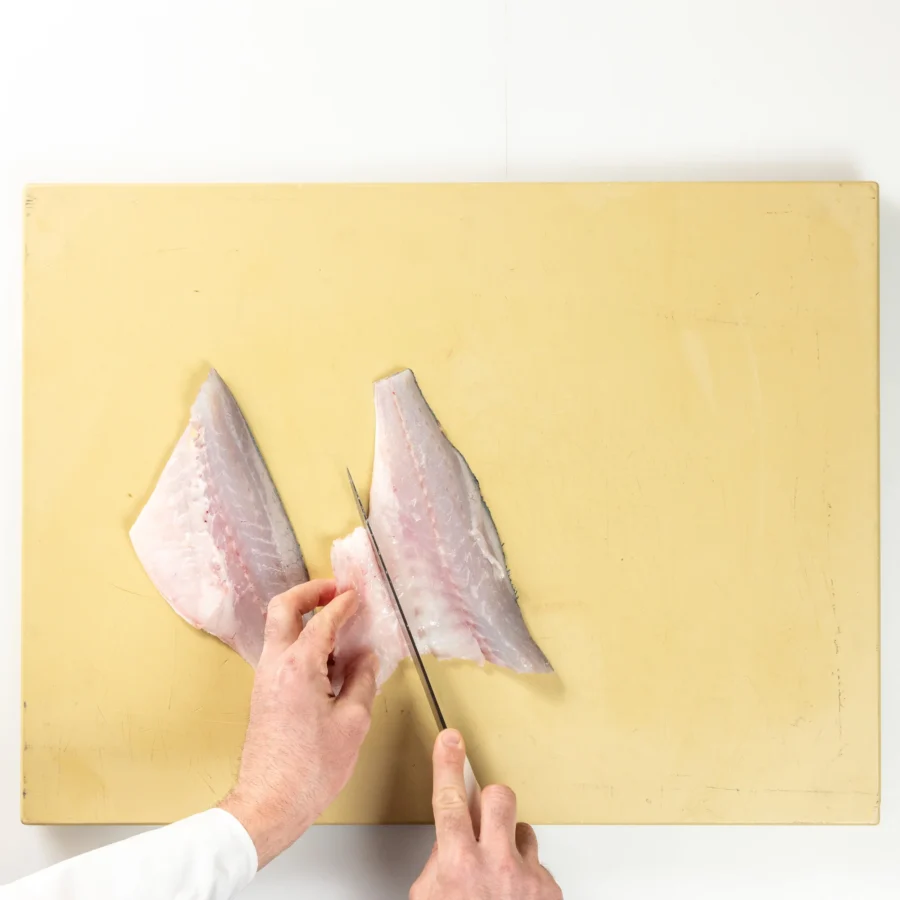
After extracting the fillet, run your fingers down the middle of the piece to check for pin bones.
Use tweezers to pull them out in their natural direction so that the meat does not tear.
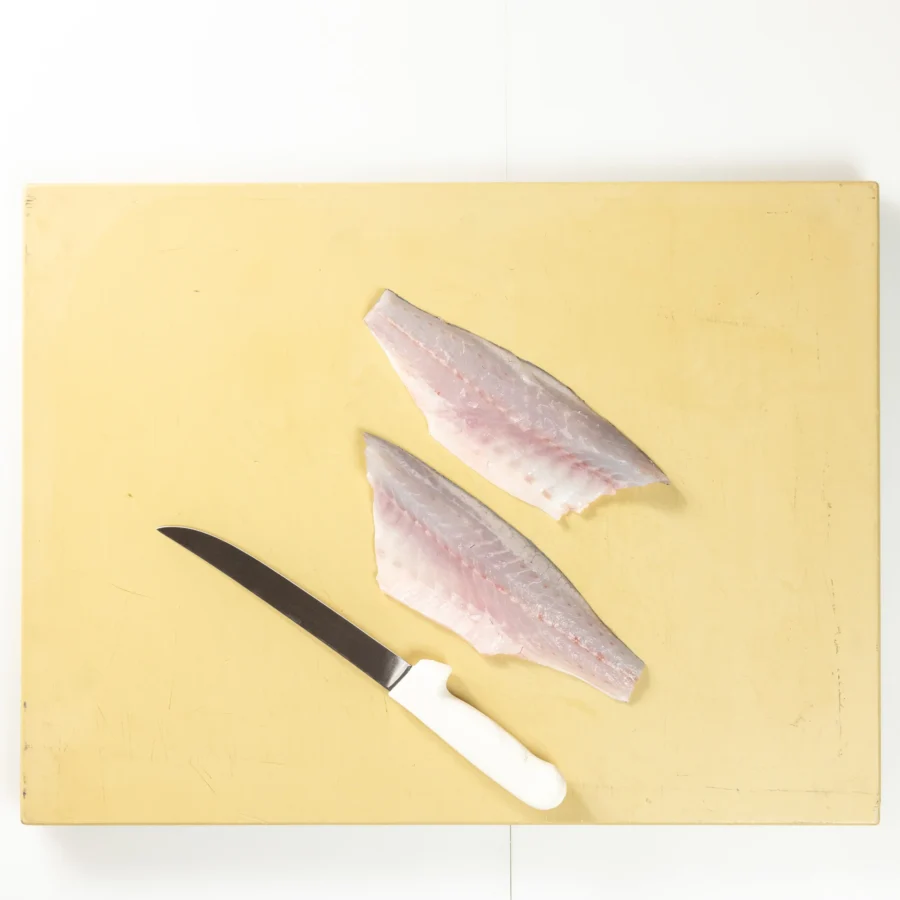
You can also trim away any irregular edges or excess membranes to get a professional shape ready for cooking.
Should You Remove the Skin?
That depends on the cooking method.
- Leave the skin on if you are grilling or pan-searing the fish, as it helps hold the fillet together.
- Remove the skin if the recipe calls for a skinless fillet or for marinating and frying.
Tips for the Best Fillet
- Always use a sharp knife.
- Do not press too hard on the knife; let it glide along the bones.
- Maintain contact with the spine while cutting.
- Dry the fish before working to improve control.
- Keep the head and bones to prepare a flavor-rich fish stock.
Common Mistakes to Avoid
- Using a dull knife.
- Straying away from the bones while cutting, which wastes meat.
- Cutting with short, choppy motions.
- Forgetting to remove pin bones before cooking.
- Washing the fillet after cutting, which can affect its texture.
FAQs
Can any round fish be filleted the same way?
Yes, most round fish follow the same principle with minor differences in size and bone structure.
What is the best knife for filleting fish?
A flexible fillet knife, with a length between 15 and 20 cm, is the best choice for most types of fish.
Should the skin always be removed?
No, many grilling and frying recipes benefit from keeping the skin intact during cooking.
Conclusion
Learning how to clean and fillet round fish gives you greater control over meal quality and saves you the cost of buying pre-cut fillets. With a little practice, you will be able to extract a clean fillet professionally with minimal waste, allowing you to enjoy fresh seafood meals every time.
Save Your Time and Order Fish Ready to be Cleaned or Filleted
If you prefer enjoying fresh fish without the hassle of cleaning or filleting, the Fish Markets app provides the perfect solution. You can choose the fish you want, then select the appropriate preparation method—whether it’s a full cleaning, scaling, custom cutting, or ordering ready-made boneless fillets for available types.
Our team carefully prepares your order to maintain the quality and freshness of the fish, delivering it right to your door so it’s ready to cook immediately. Keep in mind that cleaning and cutting are our core default services, and cooking the fish is entirely optional. Whether you are looking for whole fish or ready fillets, you will find multiple options that suit your needs with fast delivery service within the UAE.


